Your First Swim: The Lane, the Changing Room, and the Bit Everyone Dreads
Lane swimming etiquette for beginners: how to pick a lane, how to join it, how to let someone past, and how to get from the changing room to the water.
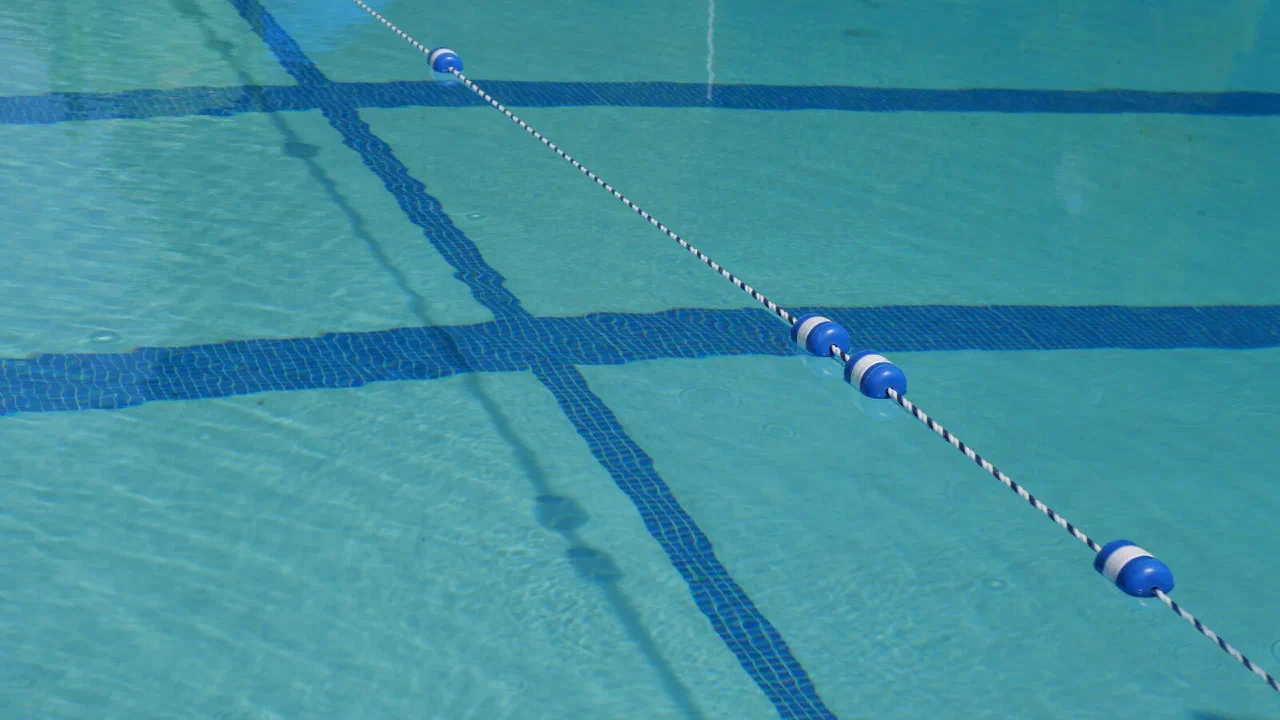
Lane swimming etiquette for beginners comes down to three things: pick the slow lane, swim anti-clockwise, and stop at the end rather than in the middle. Everything else you can learn by looking at the pool for ninety seconds before you get in, which is the single most useful thing to do on a first swim and almost nobody does it.
A pool is the easiest first session in this whole business and the one people are most reluctant to attempt, for one reason that has nothing to do with swimming. The walk from the changing room to the water is about twelve metres, and those twelve metres are the most exposed anybody feels in any of these buildings. The swimming is straightforward. The twelve metres is the bit everyone dreads, and it is worth saying plainly that it lasts twelve metres.
Pick the lane by watching, not by the sign
Most lane sessions divide the pool into three: slow, medium and fast, usually signed at the end. The signs are a guide and the lanes self-sort regardless, so the reliable method is to stand at the shallow end for a minute and watch.
What you are looking for is not speed. It is how often people stop. The slow lane is where people pause at the end, adjust goggles, stand up, do a length of breaststroke and then a length of something else. That is the lane. If everybody in a lane is doing continuous front crawl with a tumble turn, that is not the lane, whatever the sign says.
Two or three people in a lane is comfortable. Five is busy. If the slow lane has five and the medium has two, the slow lane is still the right answer on a first visit — being the slowest in an empty lane is worse than being the slowest in a crowded one, because in a crowded one nobody can see you at all.
If there is no lane division — a general swim session, with the whole pool open — go to the shallow end and the edge, and the only rule is to stay out of the middle where people are crossing.
Getting in
Use the steps or the ladder at the shallow end. Nobody dives into a lane session and in many pools it is not permitted.
Then wait at the wall for a gap. A lane has a rhythm: swimmers arrive at the end every twenty to forty seconds. You let one come in, touch, and push off, and then you go. Pushing off into the middle of an oncoming swimmer is the one genuine error here, and waiting ten seconds eliminates it.
Nobody will tell you to hurry up. Standing at the wall of a pool for thirty seconds is invisible — it is what everyone does between lengths.
Lane swimming etiquette for beginners: the three rules in the water
Swim anti-clockwise
In a shared lane you keep to the right-hand side going down and the right-hand side coming back, which makes the lane a loop. This is near-universal in the UK and much of Europe; in some countries it is clockwise instead. Watch which way the lane is circulating before you get in and copy it. If a lane has only one other person in it, you may be splitting it lengthways instead — each of you taking one half, straight up and back — and that is also normal. Which one is happening is obvious in about ten seconds of watching.
Stop at the end, not in the middle
If you need to stop — to breathe, to fix goggles, to decide whether you are done — swim to the end of the lane and stop at the wall, in the corner, out of the lane’s line. Stopping halfway down means somebody arrives behind you with nowhere to go.
This is the rule that makes a first swim manageable, because it means you can stop as often as you like. One length, stop at the wall, breathe, go again. Nobody counts your lengths and nobody is waiting for you to finish.
Let faster people past
You will be overtaken. The convention is that the faster swimmer taps your foot, and you stop at the next wall and let them go rather than trying to speed up.
It is not a complaint and it is not personal — it is traffic management. What you should not do is accelerate to stay ahead, which is how people end up exhausted in four lengths.
| Situation | What to do |
|---|---|
| Someone taps your foot | Finish the length, stop in the corner at the wall, let them past |
| You catch someone slower | Stay behind them to the wall, then go when they pause. Tapping is a last resort |
| Two of you reach the wall together | Whoever is ready goes. No negotiation needed |
| The lane has filled up while you swam | Move to the next lane along, or finish. Both fine |
The changing room and the twelve metres
The procedure, in order, so none of it is a surprise.
You change in a cubicle or an open area, depending on the building. Most leisure centres now have a mixed “changing village” of individual cubicles with a shared corridor of lockers; older pools have separate rooms with open benches. You will see which within five seconds of walking in.
Lockers usually want a coin or a wristband. Bring a coin. This is the same problem as every other locker in this business and it has the same cheap solution.
Take your towel to the poolside and leave it on a bench or a hook at the end of your lane, not in the locker. The twelve metres back is the colder and more exposed half, and a towel within reach fixes it entirely. This is the single best piece of advice about a first swim.
Then walk. Twelve metres, maybe twenty, usually along a wall. Everyone else in the building is either in the water, looking at the water, or walking the same twelve metres themselves. There is no vantage point from which anybody is examining you, and the whole thing takes eleven seconds.
A dressing gown or a hoodie to the poolside is also completely normal if it helps, and plenty of people do it.
What to take, and what not to buy
The list is short.
- Something you can swim in. Whatever you own that stays on.
- A towel. On the poolside, not in the locker.
- A coin for the locker.
- Goggles — the one genuinely worthwhile purchase, cheap, and they change the experience completely. Without them you will swim with your head up, which is harder and gets water in your eyes.
- Flip-flops, if you would rather not walk barefoot. Optional.
That is all. Everything else sold in the shop by the entrance is for people who are training, and a swimming cap is only required at a minority of pools — the sign at the door will say.
What a first swim should be
Four to eight lengths, with a stop at the wall after each one. Not continuous, not timed, and not front crawl unless you already swim front crawl — breaststroke with your head out of the water is a perfectly ordinary way to do a length and about a third of the slow lane is doing exactly that.
Fifteen or twenty minutes in the water is a complete first session, the same way a short session on the gym floor is a complete one. Get out when you have had enough, which on a first swim is usually sooner than you planned, because swimming is more tiring than it looks and that is not a sign of anything.
The boundary, as everywhere on this site: if you cannot swim, or cannot swim confidently in water over your head, a lane session is not the place to find out. Pools run adult beginner lessons and shallow-water sessions, and the timetable at the door lists them. And if exertion is a question for your body in particular — a condition, an injury, a clinician’s instruction — that is a conversation for a GP or a physiotherapist before a first swim rather than after it.
Why a pool is a good first choice
Worth saying, because it is usually overlooked when people are deciding what to start with.
A pool needs no technique to begin, costs a single drop-in fee rather than a membership, has no machines to misuse, and requires no decision about what to do when you get there — you swim to the end, and then you swim back. There is also nobody to talk to, which makes it one of the easiest things to do on your own.
The dreaded part is twelve metres long and has a towel at the other end of it. The rest is a slow lane, four lengths, and a stop at the wall whenever you want one.