Your First Session, Minute by Minute: What Actually Happens
What to expect on your first day at the gym, in order: the desk, the changing room, the forty seconds of standing still, the session, and how you leave.
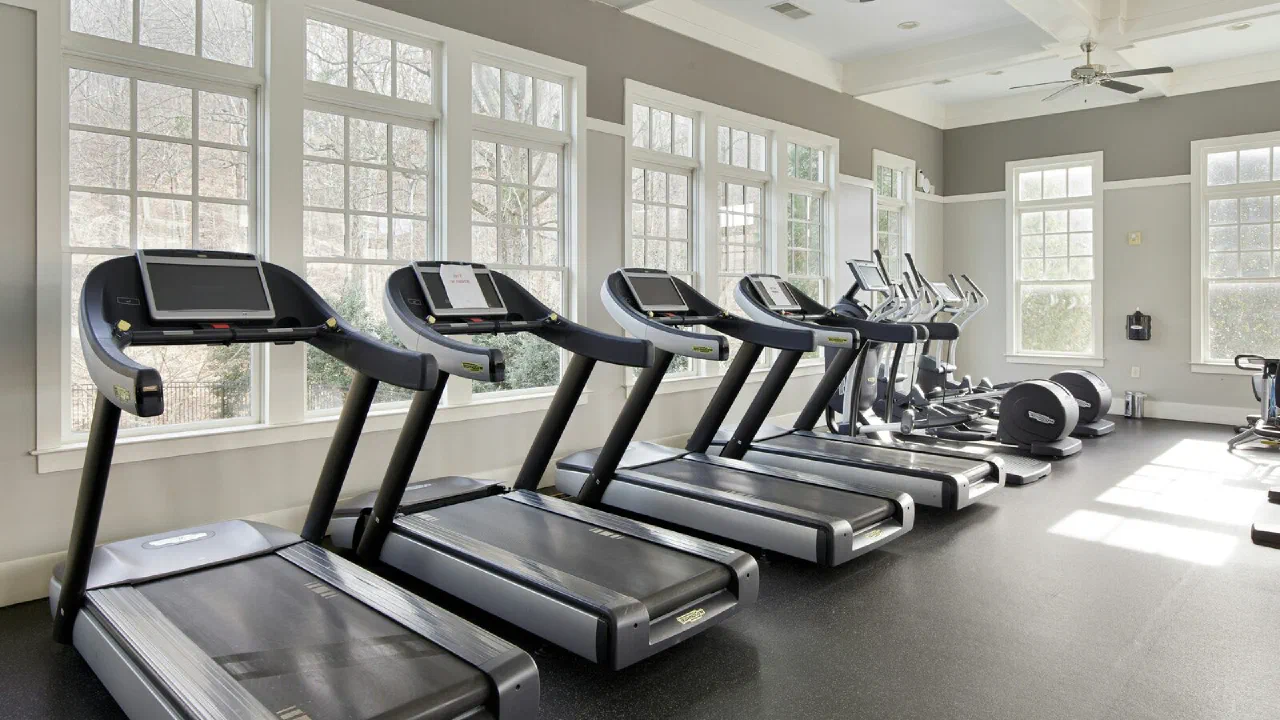
What to expect on your first day at the gym is, in order: a desk, a lanyard or a wristband, a changing room you will spend too long in, about forty seconds of standing still at the edge of a room wondering where to go, twenty-five minutes of something easier than you expected, and the door. Total elapsed time, including the standing still: under an hour.
The standing still is the part nobody describes, and it is the part that ends first sessions. Not the exercise. The exercise is fine — you have walked up stairs, you have carried shopping, your body knows how to do effort. What you have never done is walk into a room full of people who all appear to know exactly what they are doing and decide, in public, where to put yourself.
So this is the whole thing, minute by minute, from the car park to the pavement outside. It is written for a gym because that is what most people’s first session is, but the shape holds for a leisure centre, a pool and a class: arrive, be processed, change, locate yourself, do the thing, leave. Read it once and the room stops being unknown, which removes the only part of this that was actually hard.
What to expect on your first day at the gym: the five phases
Five phases, with honest timings.
| Phase | How long | What you are actually doing |
|---|---|---|
| Arriving and the desk | 3–6 minutes | Giving your name, getting access, being asked if you want a tour |
| The changing room | 5–10 minutes | Putting a bag in a locker and working out the lock |
| Locating yourself | 1–3 minutes | Standing at the edge of the floor, deciding where to go |
| The session | 20–30 minutes | Less than you think, and that is correct |
| Leaving | 5–10 minutes | Walking out, which requires no permission |
Nothing in that table is difficult. The reason it feels difficult is that it is all unfamiliar at once, and unfamiliarity at that density reads as risk. Taking it apart in advance is most of the work.
Before you go: four things to settle the night before
Settle these and the session becomes an appointment rather than a decision. Leave them unsettled and you will make five small decisions between the sofa and the door, each of which is a chance to not go.
The time. Pick the hour you would actually go, not the hour that would be ideal. If your honest answer is Tuesday after work, the first session is Tuesday after work, and it is worth knowing that is also the busiest window in most gyms. Quieter: mid-morning, early afternoon, and after about eight in the evening.
What you are wearing. Anything you can move in and shoes you can walk briskly in. That is the whole specification. The list of things you do not need to buy first is longer than the list of things you do.
What goes in the bag. A towel, a water bottle, a padlock if the lockers need one, and the thing you will walk out in. Phone this: it is not interesting and it does not need to be right.
What you are going to do when you get there. Not a programme. One sentence, settled in advance, so that the forty seconds of standing still has an answer. “Twenty minutes on a bike, then I leave” is a complete and successful first session. So is “walk on the treadmill until I have had enough.” Twenty minutes genuinely counts, and deciding that now is what stops the floor from being a question.
Minute by minute: from the car park to the door
Minutes 0–5: arriving and the desk
You walk in. There is a desk, and behind it a person who processes between forty and several hundred people a day and has no particular interest in you. That indifference is the single most reassuring fact about a gym, and you will feel it within about ten seconds of arriving.
You say your name, or you tap a card, or you scan a code in an app. If it is genuinely your first visit on a new membership, you may be handed a wristband, a fob or a printed slip. If you booked an induction, say so here. If you did not, you may be asked whether you want one — and the honest answer is yes, later, not now, unless you want to spend your first visit being shown things.
Two questions you will probably be asked, and what they mean:
- “Have you been to a gym before?” This is a routine question with no wrong answer, and “not for years” is the most common one they hear. It is not a test.
- “Do you want a tour?” Say yes if you want the geography handled by someone else, which is a legitimate preference. Say “I’m fine, thanks” if you would rather get on with it. Either is normal. Nobody is logging your answer.
If the desk is busy, you wait. Waiting at a desk is not a social event and requires nothing of you.
Minutes 5–12: the changing room
This takes longer than you plan for, every time, because of lockers. Lockers are the most variable part of a gym and the only genuinely annoying one. You will meet one of three systems: a coin-return lock that needs a coin you do not have, a slot that needs your own padlock, or a keypad or wristband system that needs a short explanation nobody has given you.
The fix is to resolve it before you are standing in front of it with a bag. Put a coin in your bag now. If the lockers take a padlock, bring one. If it is a keypad, the instruction is usually printed on the door, and if it is not, the desk will tell you in four words.
The rest of the changing room is unremarkable. You change, you put the bag away, you keep the key or the band on your wrist. People are getting dressed and looking at their phones. Nobody is conducting an inspection.
One useful decision: change at home if you can. It removes a whole phase, and it means arriving and going straight to the floor, which is far easier than arriving, changing, and then having to walk in a second time.
Minutes 12–15: the forty seconds of standing still
Here it is. You come out onto the gym floor and stop, because you do not know where to go.
What is in front of you is almost always three zones, in a predictable arrangement. Cardio machines — treadmills, bikes, rowers, cross-trainers — are usually nearest the entrance and often along a window. Fixed resistance machines, the ones with seats and pins and a diagram, are in the middle. Free weights, racks and benches are furthest in, often in a corner with mirrors and the most confident-looking people in the building.
Go to the cardio zone. Not because the others are forbidden, but because the cardio zone requires nothing of you: the machines are obvious, there is no technique to get wrong in public, and you can be on one within twenty seconds of deciding. That is the entire purpose of the first session — to be somewhere, doing something, as fast as possible.
Pick a machine with an empty one on either side if you can. Press the start button. If the console asks for your weight or an age, you can skip it; it is calibrating a calorie estimate you have no use for.
You are now in. The hard part is over, and it took forty seconds.
Minutes 15–40: the session
This part is much less dramatic than the anticipation of it.
Walk or cycle easily for five minutes. Not as a warm-up ritual — as a way of letting the room become ordinary, which it will. Look around while you do it. You will notice, in this order: that the room is quieter than expected, that most people are moving slowly, that several of them are plainly beginners too, and that at least one person is sitting on a machine scrolling their phone.
Then do the thing you decided last night. Fifteen or twenty more minutes of it. If you decided on a bike, that is a bike ride. If you want to try a resistance machine, pick one with a diagram on it, set the pin low, do ten slow repetitions, and stop. Low and slow is not a compromise — on a first session it is the correct instruction, because you have no information yet about what your body will feel like tomorrow.
Then stop. Twenty-five minutes of movement on a first visit is a complete session. It is not a scaled-down version of a real one.
One boundary, stated plainly. If something hurts in a sharp, specific, localised way — as distinct from feeling effortful or heavy — stop doing that thing. I am not qualified to tell you what it is, and neither is a gym floor. If you have a condition, a recent injury, are pregnant, or have been told by a clinician to be careful with exertion, that conversation belongs with a GP or a physiotherapist before a first session rather than after it.
Minutes 40–50: leaving
You wipe the machine down if you used one that your skin touched, which is the one piece of etiquette that is genuinely universal. Then you walk out.
That is it. There is no checkout, nobody asks how it went, and you do not have to say goodbye to anyone. The exit is the same door as the entrance and requires no account of yourself.
If you want to leave after nine minutes, you leave after nine minutes, and leaving early is not a defeat — it is a session that happened. The alternative is not a longer session; it is no session.
The three things you are afraid of, and what is actually happening
Worth naming, because they are near-universal and all three are wrong in the same way.
“Everyone will be able to tell I don’t know what I’m doing.” Some of them will, and this is where it collapses: it conveys no information they can use. A gym is a room of people doing a self-directed activity in parallel. Attention is a scarce resource and it is pointed at their own set, their own phone, their own remaining four minutes.
“I’ll use a machine wrong in front of people.” Likely, and the consequence is that you do a slightly inefficient version of an exercise. That is the whole consequence. The machines have diagrams for exactly this reason, and a member of staff asked “how does this one work?” will answer in about fifteen seconds and think nothing further about it.
“Everyone here is fitter than me.” Some are. Many are not, and the fit ones were not born that way — the room you are intimidated by is full of people who had a first session too, most of which went about as awkwardly as yours. If this is the part that is actually stopping you, the whole of arriving somewhere alone is about the ninety seconds this feeling lives in.
If it goes wrong
It sometimes does, and the failure modes are mundane. Worth knowing in advance so they read as inconvenience rather than verdict.
| What happened | What it actually means |
|---|---|
| The locker beat you and you gave up | A coin or a padlock problem. Bring one next time |
| Every machine you wanted was busy | You went at the busiest hour. Shift it by ninety minutes |
| You did nine minutes and left | You went. That is the metric |
| You felt watched the whole time | Normal on a first visit, much weaker on a second, mostly gone by a fourth |
| You could not find the thing you came to do | Take the tour you declined. That is what it is for |
| It was fine, and you have not been back | The real problem, and it is the second session, not the first |
None of those is about capability, and none of them is solved by resolving to try harder. They are logistics, and logistics have fixes.
How to make the second one happen
The first session is the one everybody writes about. It is not the one that decides anything. What decides it is whether there is a second, and the second has none of the first’s momentum — no novelty, no resolve, nothing to prove.
Two things, done before you leave the building, that make it much more likely.
Fix the date now. Not “later this week.” A day and an hour, in whatever you actually look at, decided while the session is still fresh enough to feel ordinary. Three to four days out, not tomorrow.
Write down the one thing that was annoying. The locker. The hour. The route. The bag. One sentence. Then fix that one thing before the second session, and nothing else. Most abandoned starts are not failures of motivation; they are an unfixed small annoyance encountered three times.
Then, after the second one, the shape of coming back is a longer conversation — and the two days after a first session, which can be more surprising than the session itself, are their own thing entirely.
You have not started a programme. You have been once, and arranged to go again. That is the entire objective, and it is enough.
The rest of the first time, room by room:
- Where to Stand in a Beginner Class, and What the First Ten Minutes Contain — What to expect in your first fitness class: when to arrive, where to stand, what the first ten minutes contain, and how to scale a move down unnoticed.
- How to Leave a Session Early Without It Being a Defeat — How long should a first gym session be? Twenty to thirty minutes — and nine still counts. How to leave a machine, a class or a pool early, and why that is fine.
- The Gym Floor: Etiquette Nobody Tells You, in the Order You'll Need It — Gym etiquette for beginners, in the order you meet it: the machine you want is taken, the wipe-down, putting things back, and what counts as staring.
- Your First Swim: The Lane, the Changing Room, and the Bit Everyone Dreads — Lane swimming etiquette for beginners: how to pick a lane, how to join it, how to let someone past, and how to get from the changing room to the water.
Nothing here is medical advice, and no claim in it is drawn from a study. It is one account of how these rooms are laid out and what the procedure at the desk is. Where exertion is a question for your body in particular — a condition, an injury, a pregnancy, a clinician’s instruction — that is a conversation to have with a GP or a physiotherapist, not with an article.